Would you move countries during a global recession?
2008 was a strange year to be in banking. I was working with Citibank in Dubai when Lehman Brothers collapsed. Markets went into free fall. People lost jobs overnight.
That’s also when my Australian permanent residency got approved. Everyone told me not to move. But I did. And I write about making that life changing decision here:
Circa 2008, I was working for the risk division of a major American bank in Dubai. Surreal times, because markets were collapsing faster than we could model them. Every week, another global bank was in the news for the wrong reasons. The collapse of Lehman Brothers in the U.S. had spiraled into a full-blown global crisis. Over $2 trillion in market value had been wiped off within months and even the most established financial institutions were struggling to stay afloat.
Inside my office, confidence had thinned. Murmurs about layoffs were doing the rounds. No one knew what was going to happen next. One of those evenings, when I returned home, I found a white envelope waiting for me. My permanent residency to Australia had been approved. A moment with mixed emotions of celebration and a lot of hesitation too.
The world was in recession; people were losing jobs and savings overnight. My manager warned me that it was the worst time to quit a job when I didn’t have another in hand. Logically, he was right. But deep down, I’d made up my mind.
My family had been in Dubai for three decades. I loved the city but then there was no way I could ever be a citizen there. It was absolutely unlike the ‘Dubai’ that it is today. I wanted to live in a country where I could spend the rest of my life, where I am secured and ‘Be HOME’ So when I finally received the PR approval, exactly 365 days from my initial application, I took the leap of faith. The decision could’ve cost me a flourishing career and dragged me back by years. Yet, somehow, I was convinced that Australia is where I wanted to be. My parents were apprehensive how I’d manage the entire move because I knew no one in the new continent, I had no job offer waiting for me either.
When I landed in 2010, the first shock was literal. My feet were filled with rashes. I thought it was a serious allergy. The doctor just smiled and said, “It’s just chilblains. Wear socks.” That was my first lesson. Sometimes, we take things too seriously.
Then started the small steps that felt like success: setting up a local phone number, finding the right train, understanding an accent, understanding Australian slang (which BTW I am still bad at) or even getting through a day without feeling lost. Soon, I readied myself to tackle the biggest challenge of them all: finding work.
In Dubai, jobs often came through networks. In Sydney, I knew no one. I applied to one job after another but it felt like sending letters into a void. Each day, I’d refresh my inbox as though something might change in the next five minutes. It didn’t. I realised I’d have to do something different.
Back then, being an introvert, I was someone who didn’t like to call people. Yet I picked up numbers from every job ad that listed a recruiter’s name and called them. I didn’t have a perfect pitch but I had honest conversations with them. Sometimes, people were polite but brief. Other times, they chatted. It did help that I had absolutely no one to talk to in a foreign country. Within three months, one of those calls turned into an interview. And then, into my first job. I learnt that, sometimes, a phone call that pushes past your hesitation can also be the start of a life-changing event.
I joined my new workplace as a project coordinator. My manager and I both knew that I was overqualified. But I was hundred percent committed to the job. Taking a step back, I realised, can also mean a fresh start. The first few months were about unlearning more than learning: working styles, communication and even humour. Within a year, I moved into project management.
Years later, I bought my first home in Australia. The first place I could walk into and know I truly belonged there. When my parents visited, I picked them up at Sydney Airport. I still remember my mother’s expression when she stepped out. Half wonder, half disbelief. She hugged me tightly. That moment meant a lot to me, a treasured memory!
When I look back now, I realise the 2008 crisis and my move to Australia were chapters of the same story. The financial collapse had stripped the world of its illusions of control. No financial wizard predicted this fall. The most established systems had crumbled but they were also rebuilt. Migration did the same for me personally. It taught me how to rebuild; not just a career but a sense of self. Recovery, as I know it now, begins with the courage to start again.
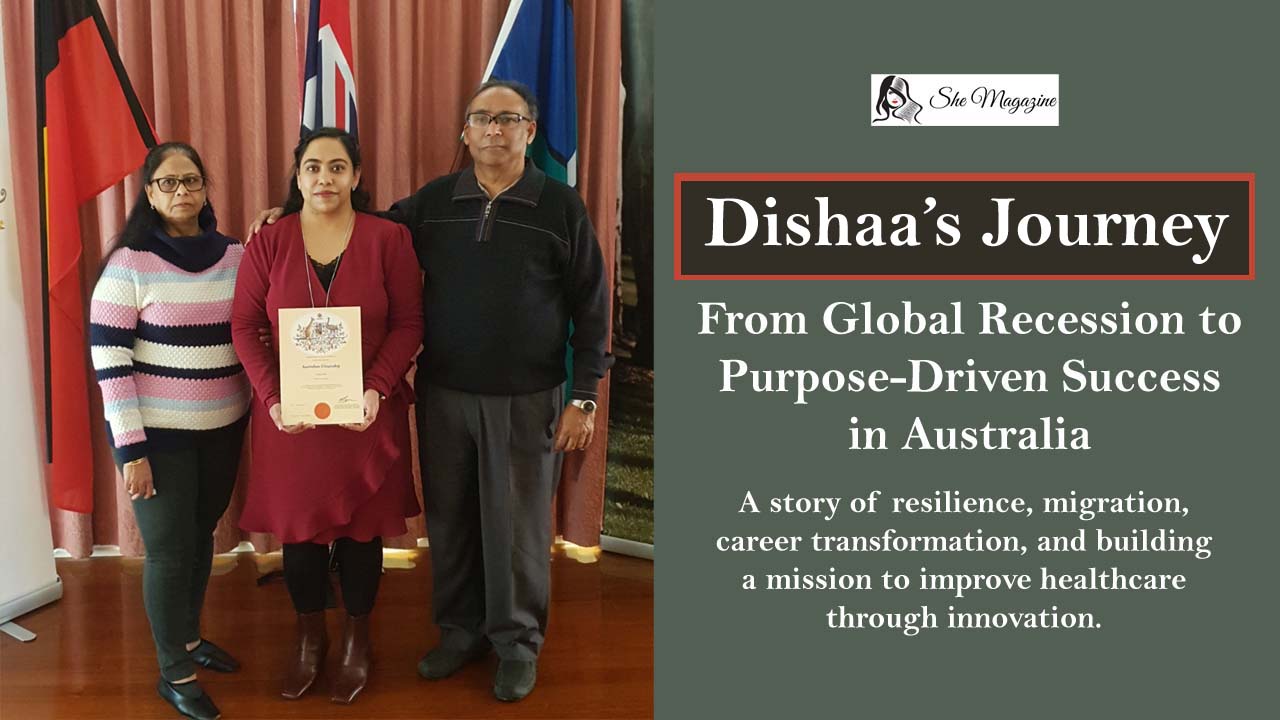
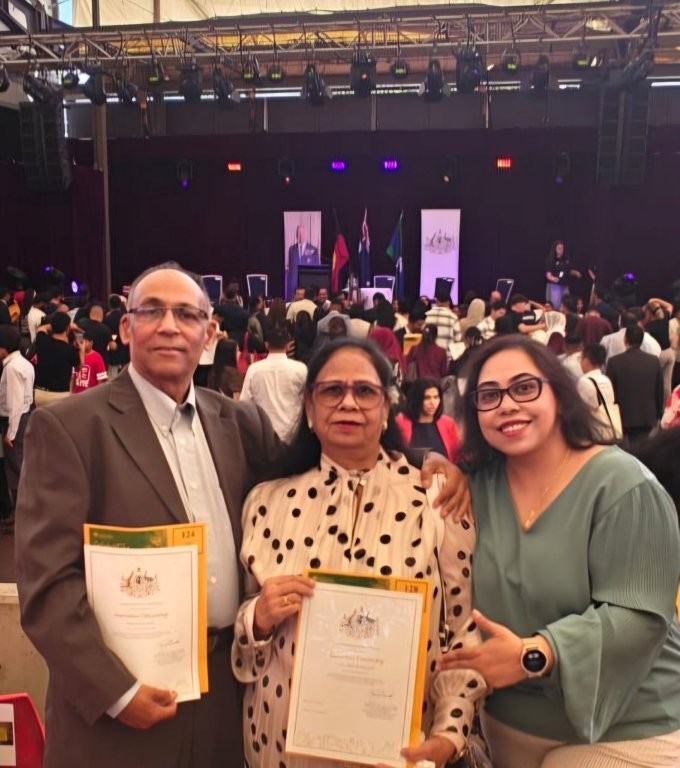
People often say ‘Dreams come true’ here is an unseen dream that has come true; not only have I become an Australian Citizen, but seeing the pride in my parents’ eyes as they became Australian Citizens too makes this moment even more meaningful.
The Next Chapter
What I didn’t know then was that Australia would become more than just a place to call home.
It would become the place where I built my life’s work.
Over the next decade, I had the privilege of working across some of Australia’s largest organisations and government agencies, leading complex digital transformation initiatives across healthcare, public sector and critical services. From NSW Health and eHealth NSW to the Australian Digital Health Agency, Healius and the National Disability Insurance Agency, I found myself drawn to one common challenge: helping people work better through technology.
But healthcare left the deepest impression on me.
I spent years working alongside clinicians, healthcare leaders and frontline teams who were deeply committed to patient care, yet increasingly burdened by administrative complexity, compliance demands and workforce pressures.
The more transformation programs I delivered, the more I realised that technology itself was never the real challenge.
The challenge was helping people reclaim time.
- Time to care.
- Time to lead.
- Time to focus on what matters most.
That realisation eventually led me to found Envisyo.
Today, my mission is simple:
To help healthcare and aged care organisations reclaim clinical capacity through practical, responsible AI.
Not technology for technology’s sake.
But technology that gives clinicians more time with patients, reduces burnout and helps organisations grow without adding unnecessary complexity.
Looking back, the decision to leave Dubai during a global recession wasn’t just a migration decision.
It was the first step in a journey that would ultimately lead me to helping shape the future of healthcare in the country I now proudly call home.
From India to Dubai to Australia.
A journey defined by resilience, reinvention and purpose.
Today, that journey continues through a mission to help healthcare leaders reclaim time for what matters most: patient care.
Connect with me:
Email: connect@envisyo.ai